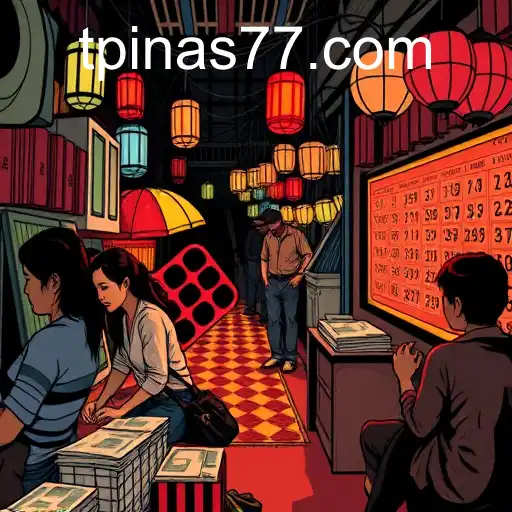
Understanding Jueteng: The Pernicious Underbelly of Filipino Gambling
In the lush archipelago of the Philippines, where vibrant cultures intersect and economic narratives weave complex patterns, jueteng has remained a controversial fixture. Despite numerous campaigns to eradicate or regulate it, this illicit numbers game continues to permeate communities across the country. Commonly whispered in alleys and markets, jueteng's allure seems to lie not only in the potential for financial gain but also in its deeply embedded social roots.
The Anatomy of Jueteng
Jueteng is a type of illegal gambling that operates on a numbers game principle. Originating from the term “hue-teng," a Chinese word, it involves betting on the results of a draw composed of two sets of numbers from 1 to 37. Unlike the more transparent state-sponsored lotteries, jueteng is usually shrouded in secrecy and handled by local operators known as "cobradores." These operators are the primary agents who collect bets and distribute winnings within their communities.
Playing jueteng requires minimal investment but promises exponential returns, making it an attractive gamble for many Filipinos, particularly those battling poverty. What makes jueteng risky is its informal nature, often leading to exploitation, corruption, and social inequality. However, its widespread acceptance speaks volumes about the societal norms and deep-seated poverty issues that compel participation.
Historical Context
Jueteng's history spans centuries, dating back to the Spanish colonial era. Over time, as different regimes came and went, this form of gambling managed to survive and adapt. It was during the American occupation that efforts to eradicate jueteng were intensified, but it only led to the establishment of more clandestine networks.
By the turn of the 21st century, jueteng had entwined with the political and economic fabric of the nation. Politicians realized that jueteng funds could bolster electoral campaigns, while police forces were sometimes implicated in exchange for protection or, at times, made complicit through inaction. Due to its pervasive nature, eradicating jueteng was no longer just a legal challenge but a societal one.
Pinas77: A Modern Digital Twist
As the world modernizes at breakneck speed, so too does jueteng. The rise of digital platforms throughout the Philippines has seen a shift in how these operations are conducted. A notable development is the emergence of Pinas77, a platform that boasts of digitalizing the jueteng experience.
Pinas77 utilizes online platforms to reach a broader audience, effectively bypassing geographical and logistical limitations that traditional jueteng operations faced. With the prevalence of smartphones and internet access, more participants can engage remotely, increasing the reach and impact of this numbers game.
While the digital shift presents potential legal circumventions, it also brings challenges concerning security, regulation, and monitoring. For those tasked with curbing illegal gambling, the advancement of such platforms introduces a new layer of complexity—a game of cat and mouse that keeps evolving with technology.
Rooted in Society: Why Jueteng Persists
Despite numerous crackdowns, jueteng survives on the socioeconomic fabric of Filipino society. At its core, it serves as an informal economic activity that provides income for not just bettors but also for a network of operators, intermediaries, and even the protectors who manage it.
It's not just the promise of quick money that sustains jueteng; it's a deeply ingrained cultural phenomenon. In some provinces, it's an open secret discussed casually in public spaces. Attempts to replace jueteng with legal counterparts like the Small Town Lottery (STL) often highlight its indispensability. While STL aims to channel gambling revenue to the government, participants often argue that it lacks the cultural authenticity or the odds that jueteng offers.
The Governance Dilemma
The persistence of jueteng despite legislative and enforcement measures reflects a governance dilemma. Efforts to stamp it out often end in futility, as eradication siphons resources without addressing the root cause: economic desperation. Moreover, regulatory attempts can sometimes inadvertently fuel corruption, as law enforcers tempted by copious under-the-table deals allow jueteng to prosper under an unofficial, lethargic watch.
For the government, tackling jueteng requires a multipronged approach. It’s not just about shutting down operations but integrating socio-economic reforms. This includes augmenting income opportunities, investing in education, and encouraging legal forms of economic activities in vulnerable regions.
The Global Perspective
Jueteng's existence reflects a widespread global phenomena—underground economies thriving where formal economic structures face challenges. Just as street lotteries can be found across various continents, jueteng represents localized versions of resistance against poverty and the promise of the unreachable immediate fortune.
To understand why it remains unyielded means acknowledging these gambles of hope as not merely acts of lawlessness but cries for economic transformation. By examining global parallels, policymakers can harvest effective countermeasures to balance the eradication of illegal gambling with the introduction of alternative, sustainable community support systems.
A Turning Point?
As the digital age continues to evolve, new challenges and opportunities present themselves. Platforms like Pinas77 symbolize this intersection, offering both an embarrassment of complexity and the sweet simplicity of reach. Legal frameworks may need adaptation to keep pace with such innovations, ensuring that as traditional methods are dismantled, they are replaced with equitable, beneficial alternatives.
The issue of jueteng in the Philippines serves as a case study of socio-political dynamics at play. It highlights the intricate balance between culture, economy, and legal authority, offering insights for the future trajectory of gambling practices in the digital age.